
You can grow coffee beans without a greenhouse by recreating the warm, humid, shaded conditions coffee plants naturally prefer.
A healthy coffee plant needs stable conditions to thrive indoors or outdoors. While growing your own coffee takes patience, the right setup can help you nurture a plant that eventually produces coffee cherries containing your own coffee beans.
What Do Coffee Plants Need to Grow?
The four key requirements for a healthy coffee plant are warm temperatures, bright indirect sunlight, high humidity with consistent moisture, and well-draining soil.
Understanding these basic needs helps you recreate the tropical environment coffee plants prefer and gives your tree the best chance to thrive.
Warm Temperatures
Coffee plants develop best between 65 and 80 °F. Temperatures below that range can cause the plant to enter survival mode and slow its growth.
It will live, but not produce energy for growth. Keep an eye out for extreme climate hazards during winter.
A few known threats in the house cause immediate damage. These include the following issues:
- Air-conditioning vents blowing frosty air onto leaves
- Freezing exterior walls in older homes during winter
- Sudden climate swings from drafts or open windows
Outdoors, use sheltered patios and move containers inside before fall snaps arrive. Heated enough to survive does not equal hot enough to form robust shoots.
Bright, Indirect Sunlight
Bright, indirect sunlight means a well-lit space where harsh rays do not hit the leaves directly. Window direction makes a difference here:
- East-facing: gentle morning sun; the sweet spot for most home growers and farmers
- South-facing: strong and intense; step back a few feet or hang a sheer curtain as a buffer
- West-facing: aggressive afternoon rays; watch for leaf scorching in summer
Insufficient illumination produces leggy stems and stalled growth, limiting photosynthesis. Too much direct afternoon sun turns foliage yellow and crispy.
Solutions are straightforward in most homes. Sheer curtains, filtered window panes, or dappled outdoor shade all perform the job without effort.
These adjustments prevent severe burns. They also encourage robust growth over time.
Humidity and Moisture
Here is where many first-time growers trip up: high humidity does not mean the soil should stay constantly wet.
A coffee plant wants vapor in the atmosphere around it without sitting in wet roots. Signs your tree is suffering from a dry indoor environment include browning leaf edges, curling tips, and stalled growth.
The goal is steady moisture in the surrounding space alongside balanced soil moisture. These two need to work together.
Solving one problem fails to resolve the other. Balancing both factors promotes lush green shoots.
Well-Draining Soil
A loose, porous potting mix that retains some water without becoming waterlogged is the right call. Heavy, compacted earth traps liquid around the roots.
That stagnant water initiates major issues. Drainage holes in your container remain important for long-term health.
Quality dirt feels airy, drains after watering, and never clumps into a dense mass. That breathable blend makes achieving the right soil moisture level possible in practice.
Selecting the appropriate substrate helps prevent root rot and provides the foundation for long-term plant health.
How to Choose the Right Coffee Plant?
When choosing a coffee plant, look for a young, compact specimen with signs of healthy growth. A good plant should have:
- Glossy, dark-green leaves without yellowing or damage
- No visible pests, webbing, or unusual spots on the foliage
- A sturdy shape that fits well in a container
For most home growers,Coffea arabica is a popular choice because it adapts well to indoor environments and container growing. Compared with robusta varieties, arabica plants are generally easier to manage at home and are more commonly available from nurseries.
You can also grow coffee from seeds, but this approach requires much more patience. Seeds take longer to establish and can require several years before the plant matures enough to produce coffee cherries.
Starting with a healthy young seedling gives you a head start and improves your chances of successful growth.
Keep in mind that coffee is a slow-growing plant by nature. It typically takes three to four years for a coffee tree to flower and produce fruit, making it a long-term gardening project rather than a quick houseplant.
Key Insight: Coffee plants grow slowly and can take years to flower and produce fruit. This is a long-game investment, not a quick-win houseplant, but when those first cherries finally appear, the payoff is something else entirely. |
 | World Tour Single-Origin Sample Pack includes a curated set of five 4oz single-origin coffees that lets you explore bold flavors from Sumatra, Costa Rica, Colombia, Ethiopia, and Guatemala. Perfect for coffee lovers who want to discover new origins, sample different flavor profiles, or enjoy a variety of freshly roasted beans while waiting for their homegrown coffee plant to mature. |
Growing Coffee Beans Indoors Without a Greenhouse
You can cultivate coffee indoors in a standard home by managing placement, watering, and humidity correctly.
Choose Your Location
An east-facing window is ideal because gentle morning sun won't scorch leaves. If unavailable, use a south-facing window with a sheer curtain. Key positioning tips:
- Keep containers a few feet back from south-facing glass in summer
- Rotate the pot every few weeks for uniform light exposure
- Use naturally humid rooms (kitchens, bathrooms) with adequate sunlight
Low-light rooms won't kill your plant, but growth will stall. Choose your location carefully.
Water Correctly
Keep soil damp but never swampy. Press a finger into the topsoil daily. If dry, water; if moist, wait another day or two.
Additional watering guidelines:
- Empty saucers after watering to prevent root problems
- Confirm drainage holes stay clear
- Reduce watering frequency in fall and winter
Overwatering and underwatering produce similar symptoms: yellow foliage and drooping stems. Proper drainage combined with close observation removes the guesswork.
Increase Humidity
Most homes run drier than tropical plants prefer, especially in winter. Raise moisture around your plant with these methods:
- Pebble tray: Place the pot on a tray filled with pebbles and water sitting just below the drainage holes; evaporation creates a moisture-rich microclimate
- Humidifier: A dependable option for steady results
- Group plants together: Vegetation releases moisture through transpiration, raising humidity
- Natural humidity rooms: Kitchens and bathrooms with adequate sunlight work well
Skip misting leaves with a spray bottle. It fails to raise ambient humidity and encourages fungal issues. When your setup works, leaf edges stay green and new shoots emerge.
Warning/Important: Overwatering and underwatering can look nearly identical, with yellowing leaves and drooping stems. Check drainage and observe your plant closely before adjusting your watering routine. |
How Do You Grow Coffee Beans Outdoors Without a Greenhouse?
Outdoor growing offers ambient humidity, filtered shade, and natural airflow, but it remains climate-dependent.
Choose the Right Climate
Outdoor cultivation thrives in mild, frost-free, and humid conditions (USDA zones 10-11). For most growers, containers are the practical choice, capturing outdoor benefits while allowing mobility when weather threatens.
Coastal regions and Southern states have a clear advantage. Areas with hard winter freezes face steeper challenges.
Key outdoor positioning:
- Aim for partial shade or dappled light rather than direct sun
- Use sheltered spots like covered patios, fence lines, or shaded areas
- Avoid wide-open, exposed positions
Protect from Cold Weather
Coffee plants don't tolerate frost. Cold winds can cause foliage damage, and once frost damage appears, recovery may not be possible. Take preventative measures:
- Move potted containers indoors before nighttime temperatures drop below 55°F
- Use sheltered patios or covered porches as a buffer during mild cool spells
- Bring plants inside before cold fronts arrive
- Keep frost cloth on hand for surprise temperature drops when moving heavy pots proves difficult
Container growing beats in-ground planting for most home gardeners because mobility remains your top cold-weather defense.
Before growing your own coffee plant, it can help to understand the origins of this crop. Learn more about coffee’s journey from farm to cup in our guide on where coffee beans come from.
How to Care for Your Coffee Plant Year-Round?
Year-round care focuses on four key maintenance tasks: pruning, repotting, fertilizing, and pest monitoring. Once you've dialed in placement, watering, and humidity, ongoing success comes down to a straightforward seasonal rhythm. Just a few regular habits keep your plant healthy between exciting milestones.
Pruning
Prune your plant to maintain shape and improve airflow. Remove dead or crossing branches to encourage fresh shoots and prevent the stalk from getting too leggy over time. This simple practice keeps your coffee plant compact and productive.
Repotting
Repotting becomes necessary when roots start circling the container's bottom or pushing through drainage holes. Most active specimens need a larger pot every one to two years. This gives the root system room to expand, and supports continued growth.
Fertilizing
Apply fertilizer with care using a balanced, slow-release formula. Feed your plant during the active growing season in spring and summer, then pull back in fall and winter when growth naturally slows. Overfeeding causes more harm than underfeeding, so follow package directions closely.
Monitoring for Pests
Indoor setups are not immune to unwanted guests, so regular pest monitoring is important.
Keep an eye out for these frequent threats:
- Spider mites: Look for fine webbing and stippled, dull-looking foliage
- Fungus gnats: Tiny flies hovering near the soil surface, a reliable sign of overwatering
- Scale: Sticky residue on stems is the telltale sign
Catching pest problems early makes treatment simpler and prevents serious damage to your plant.
Harvesting, Drying, and Roasting Your Homegrown Coffee Cherries and Beans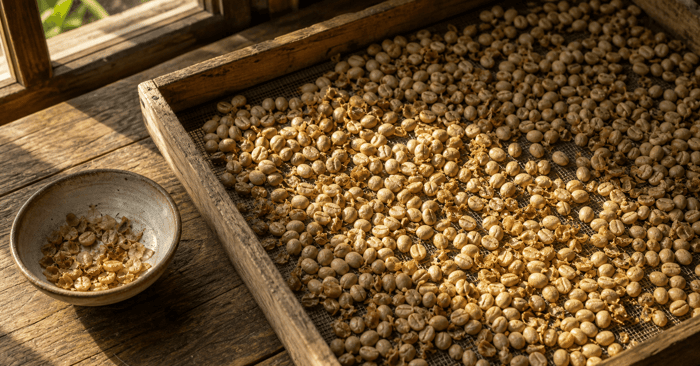
This stage transforms years of tending a crop into coffee beans you can taste. Yields remain small, so you might only gather a small amount of beans in the beginning.
Going from cherry to brewed cup makes the wait worthwhile. Follow this full harvest-to-roast process to prepare your batch of coffee beans.
Each step requires attention to detail. Let us look at the steps to process the fruit:
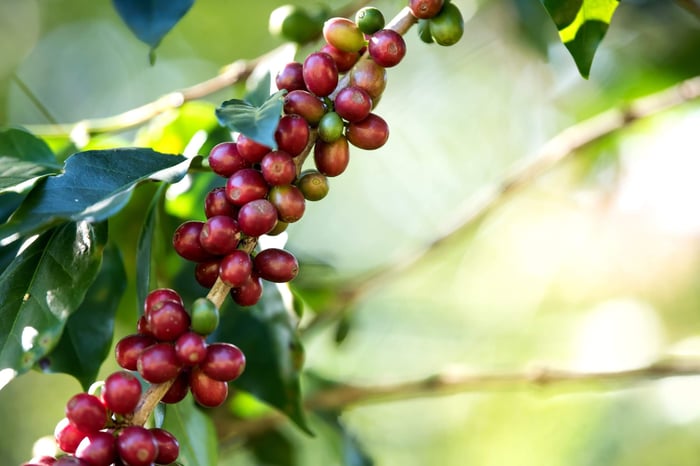
- Wait for the cherries to turn deep red, which signals they are ready and have reached peak ripeness
- Hand-pick the finest ones and leave any green fruit on the branches to continue developing
- Remove the fruit flesh from each cherry to expose the two seeds inside
- Dry the seeds on a screen or rack in a heated, well-ventilated spot for two to four weeks, until the parchment layers turn papery
- Remove the dried parchment layers by hand or with a manual mill
- Roast beans in modest batches at home using a cast-iron pan, a popcorn maker, or a dedicated home roaster
Once the beans are ready, do not stress over technical details regarding roasting profiles. Roasting your own coffee beans focuses on the sensory experience.
You get to enjoy the smell of raw seeds transforming under heat and the sound of that first crack. The dark amber color spreading across the beans is a rewarding sight.
Then comes the brew, followed by the tasting. Enjoying a beverage you nurtured from beans to finish forms the entire purpose of this project.
Homegrown coffee beans offer more complexity than standard store-bought beans. It is a satisfying endeavor to produce your own beans.
Enjoy Great Coffee While Your Plant Grows
Growing coffee at home is a rewarding process that takes patience, care, and the right conditions. From nurturing your plant to harvesting your own cherries, every step brings you closer to understanding the craft behind every cup.
While your coffee tree takes time to mature, Bones Coffee Company lets you enjoy exceptional roasts right away. Explore bold single-origin coffees, sampler packs, and single-serve pods to keep your coffee journey going.