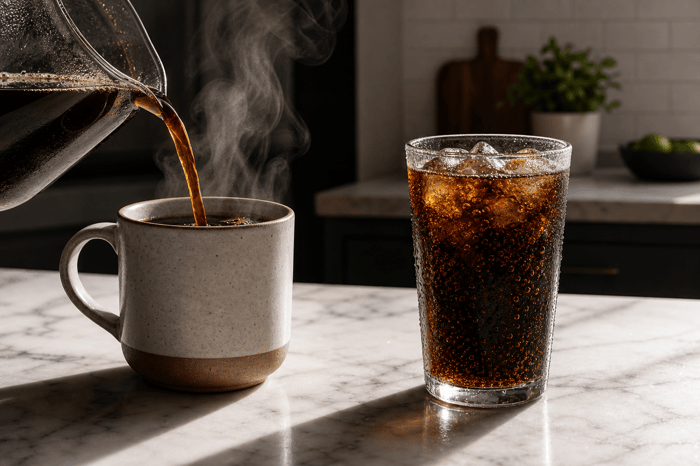
When comparing the caffeine in coffee vs. soda, coffee comes out ahead. An 8-ounce cup of brewed coffee typically contains 95 to 200 mg of caffeine, while a 12-ounce serving of cola contains just 35 to 45 mg.
Below, we compare coffee and soda side by side, explain what affects caffeine content, and help you choose the right beverage for your energy needs.
How Much Caffeine Is in a Standard Cup of Coffee?
Coffee is one of the most concentrated natural sources of caffeine, delivering far more per serving than most teas, sodas, and energy drinks.
The caffeine content varies by type and preparation method, making it difficult to predict exactly how much caffeine is in every cup.
Here’s a quick breakdown of typical caffeine content per serving:
Coffee Type | Serving Size | Caffeine Range |
|---|---|---|
Brewed drip coffee | 8 ounce | 95 to 200 mg |
Shot of espresso | 2 ounce | ~126 mg |
Instant coffee | 6 ounce | 45 to 60 mg |
Decaf | 8 ounce | 2 to 15 mg |
Looking at the numbers, standard brewed coffee delivers substantially more caffeine than instant coffee, while decaf contains only a small fraction of the amount found in regular coffee.
Even decaf contains small amounts of caffeine, though usually not enough to affect sleep for most people.
Our #1 Pick As The Best Coffee Sample Pack for a Stronger Caffeine Boost
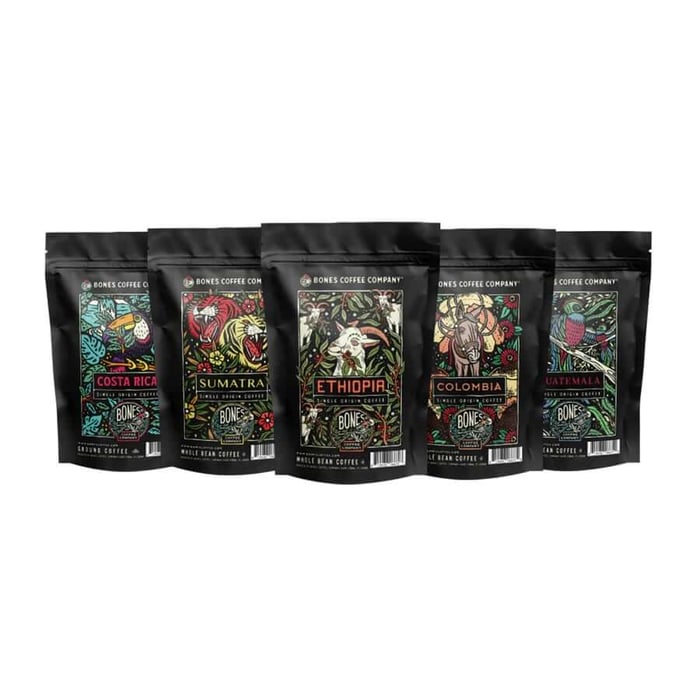 | World Tour Single-Origin Sample Pack is a strong option for those who want to explore a variety of single-origin coffees. The set showcases five distinctive single-origin coffees sourced from Sumatra, Costa Rica, Colombia, Ethiopia, and Guatemala. ★★★★★ |
Why Does Black Coffee Usually Pack a Stronger Energy Boost?
The difference comes down to concentration. Coffee delivers a more potent extraction of caffeine, while soda contains far less caffeine per ounce and often comes with added sugar and empty calories.
Ounce for ounce, coffee typically contains more than three times the caffeine as cola. Coffee averages about 12 to 25 mg per ounce, compared with roughly 3 to 4 mg per ounce in soda. That means even a small cup of coffee can provide a stronger boost than a much larger soft drink.
Black or unsweetened coffee also offers a cleaner energy lift. Unlike many sugary sodas, coffee provides alertness without the same sugar load that can contribute to energy fluctuations. It also contains natural compounds like polyphenols that may support focus and overall health benefits.
Key Insight: Coffee significantly delivers more caffeine per ounce than soda. With 12‑25 mg per ounce, it’s not just stronger. It provides sustained energy without the sugar crash that sabotages focus. |
What Affects Caffeine Content and Your Daily Caffeine Intake?
For coffee, caffeine levels depend on several factors, including bean type, roast, grind size, brewing method, and steep time. For soda, the total amount is shaped more by formulation, serving size, and whether the drink is caffeinated at all.
Understanding these differences can help you make smarter choices about how much caffeine you consume throughout the day.
Bean Type, Roast, and Brew Method
Three main factors influence how much caffeine ends up in your cup: bean type, roast, and brewing method.
First, the bean matters. Robusta beans naturally contain about 1.4 times more caffeine than Arabica beans, though many coffee shops prefer Arabica for its smoother, more complex flavor.
Roast also plays a role, though the difference is small. Lighter roasts generally retain slightly higher caffeine by weight, despite the common belief that darker roasts are stronger.
Finally, the brewing method affects extraction. Cold brew often ends up with more caffeine levels due to its long steeping time and higher coffee-to-water ratio, while espresso delivers a more concentrated dose in a much smaller serving.
Understanding the best ways to make coffee can help you control both flavor and caffeine levels more effectively.
Soda Brand, Serving Size, and Formula
With soda, caffeine content depends largely on the brand, serving size, and formula. Some caffeinated sodas contain noticeably more caffeine than others.
For example, Mountain Dew typically has more caffeine than standard Coca-Cola, though it still usually falls short of a typical cup of brewed drip coffee.
Serving size can also be misleading. A standard 12-ounce can is the baseline, but larger bottles may seem more energizing simply because they contain more liquid overall. Even then, the caffeine per ounce stays relatively low compared with coffee.
Formula matters too. Regular, diet, and zero-sugar versions can differ in caffeine content and overall drinking experience. Sugary sodas may create a brief lift, but a more noticeable energy drop often follows that spike.
Pro Tip: Forget the myth. Darker roasts don’t equal higher caffeine levels. Lighter roasts retain slightly more by weight. Pair with a coarse grind and slow extraction for a bigger, smoother energy lift. |
Black Coffee vs Soda: Which is the Better Choice for Energy?
This comparison is about more than caffeine numbers alone. It can also help you evaluate your soda consumption habits.
When coffee and soda are compared side by side, black coffee is usually the stronger choice for steady energy and focus. It contains more caffeine per serving, delivers a cleaner lift without added sugar, and remains calorie-free when consumed plain.
Soda, by contrast, usually contains much less caffeine and often relies on sugar for its immediate effect. That can create a quick burst of energy followed by a noticeable sugar crash after around 60 minutes. Regular soda also adds empty calories with little nutritional value.
For most people looking for a stronger, more reliable boost, black coffee is the better option when managing caffeine intake. And for those who are more sensitive to too much caffeine or experience anxiety, decaf can still provide the flavor and ritual of coffee with only minimal stimulation.
Get a Stronger Energy Boost from Bones Coffee Company
For regular consumption, coffee offers a stronger energy boost than soda, but quality still matters. Freshness, sourcing, and roasting all affect how your coffee tastes and performs.
If you want a better cup, Bones Coffee Company offers a variety of freshly roasted coffees designed for different flavor preferences. Unlike stale supermarket bags, each batch is roasted to order for better freshness and taste.
With more than 30 creative flavors, plus whole beans, ground coffee, pods, and ready-to-drink options, there’s an easy fit for almost any routine. Many options are crafted with zero sugar, so you can enjoy rich flavor without the crash that often comes with sugary drinks.
Bones Coffee Company gives you a quality coffee experience you can feel good about. If you’re ready to move beyond sugary soda, this is an easy upgrade to your daily routine. Explore our bold coffee sample packs today.